Exmouth
Spend any amount of time daydreaming about Western Australia’s coastline and images of sun-drenched days, rugged seascapes and azure waters are sure to come to mind. The good news is, Exmouth and the stunning Ningaloo Reef are every bit as good as you imagined.
With its astounding array of marine life, Ningaloo Reef is a must-see attraction for those travelling the West Coast of Australia. Not only is it the country’s longest fringing coral reef, but it’s also the only one of its kind so close to the Australian coast, which, among other things, has earned it World Heritage status.
This section is one of the few places in Australia where you can put on a mask and flippers, and within moments of leaving the shore, be immersed in a stunning coral reef along with abundant fish species. For those who dream of one day swimming with manta rays or whale sharks, Exmouth is one of the best places to book a tour to swim with these magical creatures, which, for most, will be a once-in-a-lifetime opportunity. Ask anyone close to either of these enigmas of the deep, and they’ll tell you that the experience is well worth the expense.
At under an hour’s drive, the town of Exmouth goes hand in hand with the enthralling Cape Range National Park. For those who love the outback as much as the coast, you’ll have the best of both worlds, with two very different landscapes colliding together with jaw-dropping results.


For those keen to track down some of Western Australia’s more elusive creatures, there’s plenty of wildlife to discover here. Seasonally, turtles are a common sight within the Jarabi Turtle Reserve, a coastal stretch where sea turtles come to lay their eggs at night. Whale watching is also top-notch, with large numbers seasonally visible from the shore (more on this shortly). Emus can be spotted along the sandy stretches of the coast, and even more surprisingly, many of them can be found roaming the streets of Exmouth — some with a mob of chicks following closely behind. Indeed, it’s common to see these Australian icons much more accustomed to humans here than you’d usually encounter in the bush.
Overall, there’s plenty to discover in Exmouth, both on and off the major tourist trail. For those who dream of Western Australia’s revered beaches, the following free things to see and do in and around town are sure to impress.
Without question, the best thing to do while staying in Exmouth is to visit the captivatingly beautiful beaches of the Cape Range National Park. With water that needs to be seen to be believed, it’s a standout region of the state. To be sure, few areas in Australia come close to the rare qualities of this stunning coastline.
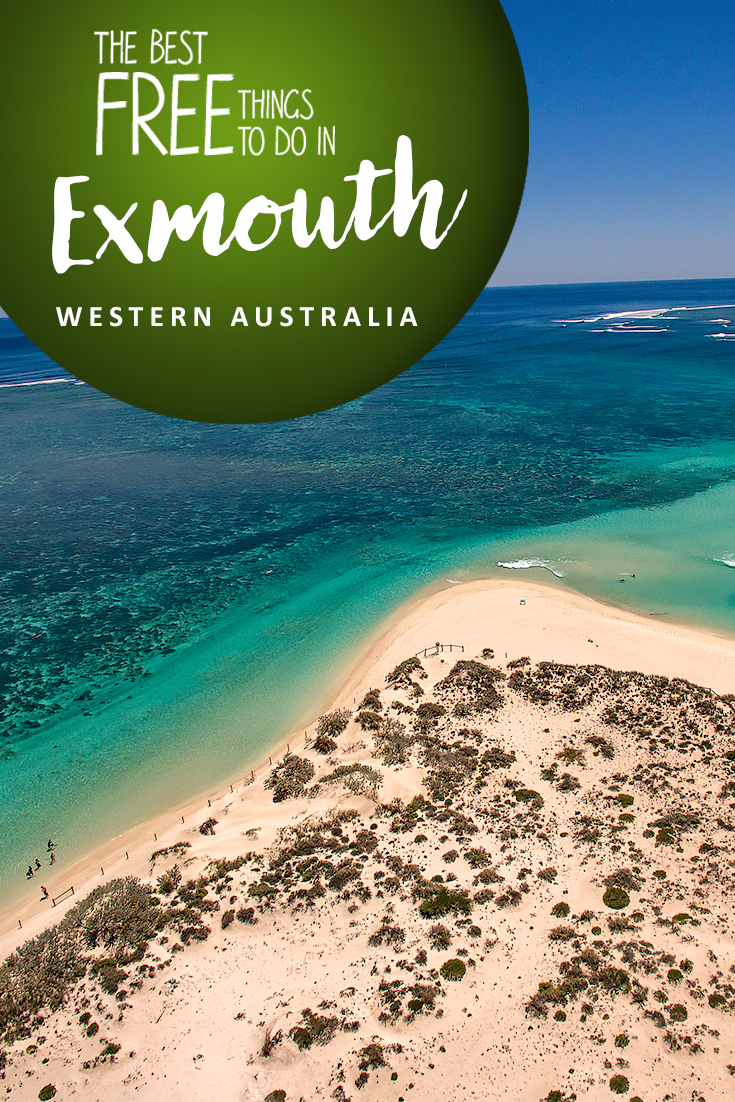
Of all the sandy havens along this stretch of Western Australia’s coast, Turquoise Bay would have to be the most idyllic. In fact, many travellers have dubbed Turquoise Bay one of Australia’s best beaches. Given a bright, sunny day (common during the dry season), the azure waters of Turquoise Bay give credit to its name. With its iconic West Australian landscape of earthy colours and vibrant hues, it’s a mesmerising seaside environment that will be remembered for many years to come.


-
 Turquoise BayFun in the sun
The snorkelling is sensational at Turquoise Bay with masses of coral structures anywhere from 20-100 metres from the shoreline. Here you can see a whole host of fish — many of which are distinguished by brilliant colouration and markings. Add to this a chance encounter with a sea turtle, and you’ve got all the makings for a memorable day of fun in the sun.
The tide moves quickly here, which can, surprisingly, be of benefit for experienced swimmers. Wade in at the southern end of Turquoise Bay, and the northerly current will move you along with next to no effort required on your part. Just be aware to exit at the tip of the sandbar or ‘point’ of Turquoise Bay. For those with less experience, swimming an hour either side of high or low tide will see the current slow to a point that it becomes child’s play.
While it may not be as postcard-perfect as Turquoise Bay, Oyster Stacks — located about one kilometre further south — is another superb snorkelling spot, and some would argue it’s even better. If you enjoy exploring beneath the surface, be sure to add it to your list.
Grade: Easy, 300m return. Facilities: Public toilets.
Sandy Bay is another stunning beach located within Cape Range National Park. With many qualities similar to those of Turquoise Bay, it’s a great place to slap on some sunscreen and enjoy one of Western Australia’s best beaches. The waters here are brilliant on a bright sunny day, with the hours either side of midday adding that extra zing.


-
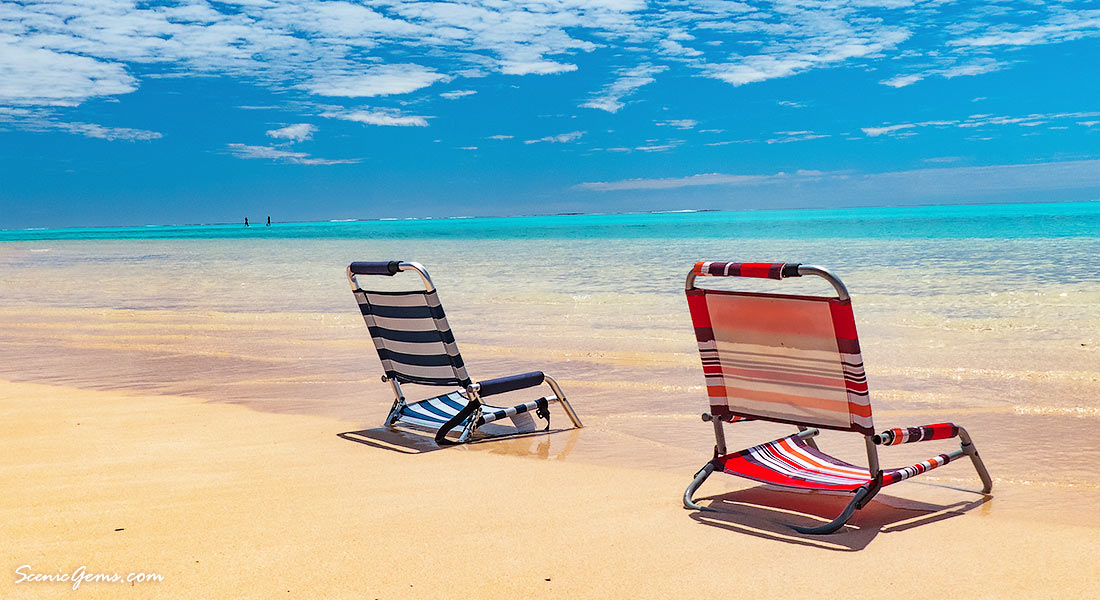 Sandy BayPostcard perfection
With clear, shallow waters suitable for the young ones, it’s the perfect place for all ages to enjoy. However you spend your time, you’ll not forget this sensational beach in a hurry. Tip: For those who’d like to explore further, there’s a freshwater lagoon near the left-hand end of the beach, which attracts a variety of birds, including the odd emu. Bring a zoom camera, and you may fire off a shot of an emu with azure water as the background.
Grade: Easy, 300m return. Facilities: Public toilets.

Most who come to Exmouth leave without seeing Charles Knife Canyon, which is a shame, as there are some awe-inspiring vantage points to be found in its upper reaches. What’s more, the stunning views to be had are easily accessed by car, making this a must-see destination for those who love the path-less-travelled.
The scenic drive starts on the coast at sea level but very quickly ascends into the interior of the Cape Range peninsula. With a barren, treeless landscape at the top, the views are encompassing with sweeping vistas up and down the coast.
-
 Charles Knife Canyon DriveRoadway Charles Knife
 -
 Charles Knife CanyonCape Range

You’ll find the access road to Charles Knife Canyon on your way up the peninsula, before you reach Exmouth. It’s a great detour either on your way in, out, or as a day trip.
Once at the top, there are numerous unmarked patches of dirt to pull over into, each offering a slightly different perspective of the gorge and the greater peninsula. Standing at any number of unofficial vantage points is a memorable experience, with the earthy colours of the canyon breathtakingly spectacular, as is the sense of scale.
In short, if you love a grand lookout, this is an inspiring view of both the canyon and the coastline, which, with a little planning, should be seen by all.
Grade: 15km return, sealed road to Charles Knife Canyon Lookout. Facilities: Note, there are no facilities.
If you’re looking for a little slice of paradise that doesn’t get the same crowds as the big-ticket attractions, Yardie Creek might be for you. Walking alongside the creek is highly rewarding, as it makes its way from the ocean, deep into the interior of the peninsula. Highly atmospheric, the sunburnt colours of the gorge walls are stellar, and the icing on the cake is that there most likely won’t be anyone else there to interrupt the views.
There are two walks to complete here, the first being the Yardie Nature Walk. With interpretive signage to take in as you make your way alongside the creek, this is an effortless stroll along a well-defined track. Optionally, you can sign up for a tag-along tour of the trail at the Milyering Discovery Centre, as the park rangers usually conduct free guided walks of this nature trail.
Extending from the end of the nature trail, the Yardie Gorge Walk steps up the grade, tackling more rugged terrain up to a vantage point of Yardie Gorge. It’s definitely worth adding this trail, as the views from the top of the ascent are expansive, with the colours of the gorge walls proving to be quite spectacular. Be sure to also keep an eye out for the elusive Yellow-Footed Rock Wallaby on this trail, as they are known to frequent this area.


If you have a tinnie, kayak, paddleboard or indeed any floatation device, Yardie Creek is a great place to immerse yourself. For those without their own watercraft, a paid boat tour is a great alternative, taking you into the most scenic parts of the gorge while offering plenty of interesting insight along the way.
The inlet where Yardie Creek empties into the ocean is also a beautiful place to relax and enjoy this pristine environment, with a decent picnic area not far away. You can also drive your car onto the beach at the inlet, though the sand is quite soft in sections and is best reserved for experienced four-wheel drivers only. Overall, Yardie Creek has many terrific aspects, and with a little forethought, can be quite a remarkable adventure.
Grade – Yardie Creek Nature Walk: Easy, 1.2km return. Yardie Gorge Walk: Moderate/difficult, additional 800m return. Facilities: Public toilets and sheltered picnic tables.
A very easy and accessible attraction within Cape Range National Park, Vlamingh Head Lookout is an immersive experience that is quite popular. This bluff by the sea affords expansive views out to the ocean and is a great whale-watching vantage point. In fact, Exmouth is one of the best places in Australia to see humpback whales. Should you be here between July and October, there’s a very good chance that you’ll see these majestic creatures. Vlamingh Head is a well-known whale-watching spot as they rest in the gulf with their calves, before making their way down south later in the year.
-
 Vlamingh HeadLighthouse
 -
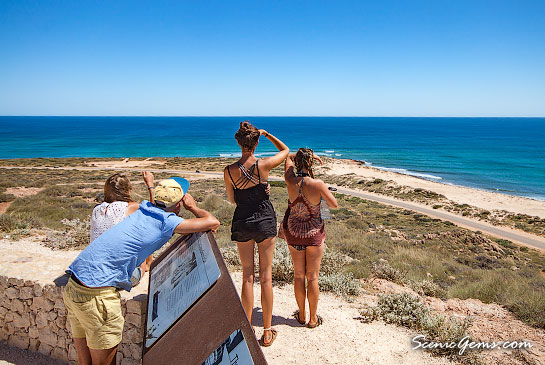 Vlamingh HeadTerrific Whale Watching
-
 Vlamingh Head LookoutInformative intepretive signage
If you have a pair of binoculars, they will be put to good use here. While the headland is at a perfect height for whale-watching, it is set back more than two hundred metres from the shoreline. Having said that, you can still see the whales with the naked eye, and you may even see one breach the water’s surface. Once again, binoculars or a zoom camera will serve you well. If you can’t make it here during the whale season, the views are still worth the short drive up to the lookout.
Grade: Easy, drive up to the lookout. Facilities: Note, there are no facilities.