


Kakadu
For those seeking to see the untamed regions of Australia, few locations offer the diversity of wildlife and the sheer rugged beauty of Kakadu National Park. Internationally recognised for its unique environment and Aboriginal culture, Kakadu is one of the few places in the world to be dual-listed by UNESCO for both its outstanding natural elements and exceptional cultural values.
At close to 20,000 square kilometres, Kakadu is Australia’s largest national park. To put this into perspective, that’s half the size of Switzerland!
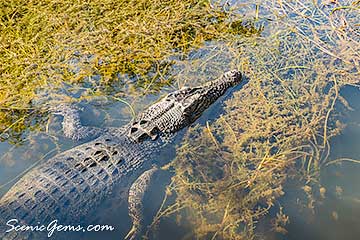
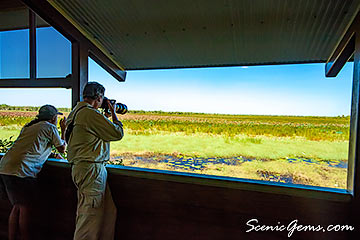
While much of this landscape is harsh and barren, the huge wetland systems found within the park’s borders prove to be a lifeblood to the area. The wildlife of Kakadu is prolific around these waterways, with the various areas coming alive at dawn and dusk. It’s a thrilling experience and a highlight of any traveller’s trip to the Top End. Indeed, it is regarded as one of the richest biological regions in the country, with Kakadu National Park home to one-third of Australia’s bird species.
With each passing wet season, the plains of Kakadu replenish with newfound life. The region has proven rich in resources for many Indigenous Aboriginal communities, with an occupation of these lands dating back at least 65,000 years. You’ll find one of the highest (and oldest) concentrations of rock art sites in the world at Kakadu, which would be worthy of a trip in itself; the staggering array of jaw-dropping natural attractions to be uncovered catapults Kakadu into one of Australia’s premier big-ticket destinations.





We should note that careful planning is needed to see the best Kakadu has to offer. You see, with the park being so big, the distances between attractions can be substantial. For instance, the travel time between the northernmost and southernmost attractions featured on this page is over three hours one way! If you were looking to see all that is on offer, our tip would be to choose two, perhaps three accommodation options as you travel through this sizeable national park.
It’s also worth noting that you won’t find many shops or facilities in this remote region. In fact, the entire area is pretty much as nature intended. Having said that, the camping is as raw and rugged as the country itself and will be just the thing for those who choose this mode of travel.
Some say Kakadu is overrated, which, without careful knowledge or planning, could very well be the case. Get the basics right and, rest assured, you’ll love every piece of Kakadu.
Sitting at the top of an awe-inspiring list of attractions, Nourlangie Rock is home to some of the oldest and best-preserved examples of Aboriginal rock paintings you’ll find not only in Kakadu, but all of Australia. There are over 5000 recorded rock art sites in Kakadu/Arnhem Land combined, with an Aboriginal occupation of these lands dating back at least 65,000 years, with some estimates suggesting 80,000 years.


-
 Nourlangie RockDancing people rock art
Nourlangie Rock has long been a place of Aboriginal importance. Composed of a series of rocky outcrops, visitors to Nourlangie Rock can step inside a large Aboriginal shelter, as well as two extensive gallery sites — all of which house a stunning array of rock art.
The myriad trails in and around the rocky outcrops are well-formed (and well signposted) and suitable for people of all ages and abilities. Interpretive signage is on hand, providing further insight into the depictions and what they represent. If you happen to be visiting in the dry season, talks are conducted by park rangers, whose fees are included in your Kakadu park pass.
Continuing from the Indigenous artefacts, the walk optionally leads up to Gunwarrdehwarrde Lookout — a highly recommended extension to the loop walk. This is a short, moderate-grade walk up to a natural viewing area, with sensational views of the Arnhem Land Escarpment and surrounding plains.
-
 Gunwarrdehwarrde LookoutAn inspiring outlook
From the lookout, it’s a gentle grade back down to the start — by which point you’ll have experienced a stunning array of rock art and scenery.
If you’re looking for more to do in this area, the Anbangbang Billabong walk is worth a mention, with its mesmerising views across the water and back to Nourlangie Rock. Clambering up the short but steep trail to the nearby Nawurlandja Lookout is also well worth the effort — particularly at sunset, as the warming colours of the sun light up the face of the Nourlangie Rock escarpment.
Overall, this is a standout attraction of the Northern Territory. If Indigenous art and culture interest you, the extensive display of fascinating art at Nourlangie Rock is world-class and well worth a visit.
Grade – Nourlangie Rock (incl. Gunwarrdehwarrde Lookout): Easy/Moderate 1.5km loop. Anbangbang Billabong Walk: Easy, 2.5km loop. Nawurlandja Lookout: Moderate, 600m return. Facilities: Public toilets at Nourlangie Rock main carpark.
A highlight for many who travel to Kakadu, Gunlom Falls is a powerhouse of natural beauty. Perched atop a waterfall, the views are gob-smacking, with an uninterrupted outlook over outback plains that is a cause for wonder and delight. Added to this, Gunlom’s natural infinity pool is as good as the images suggest. Surely — had this natural wonder been man-made, a hefty fee would be attached; that it’s all included in your park pass makes the experience that much sweeter.


The walk up to the top will get your heart pumping, with the upper pools accessible via the Gunlom Lookout Walk. It’s a bit of a rocky scramble, and not suitable for those with mobility constraints, but the effort will be long forgotten once the incredible views open up before you at the top.
Also known as Waterfall Creek, Gunlom comprises two pool sections. From the infinity pool above, the water flows over the edge of a sizeable cliff face to the lower pool below. This pool is at ground level, so if the walk up to the top pool is too steep, there’s fun for all ages at this highly accessible waterhole.
Finally, there is great unpowered bush camping managed by Parks and Wildlife NT adjacent to the attractions at Gunlom, which will suit self-sufficient campers. Camping here is a good choice, as taking in a sunset from the top of Gunlom will be remembered for many years to come. Overall — as far as Top End experiences go, it doesn’t get much better than this.
Note: The drive to the falls is via a 20-kilometre stretch of unsealed road that can get quite corrugated as the dry season progresses.
Bottom Pool – Grade: Easy, 200m return. Gunlom Lookout Walk – Grade: Difficult, 1km return. Facilities: Public toilets, campground (including hot showers), sheltered picnic tables & barbeque area.

Steeped in a rich history cultivated by Australia’s traditional owners, Ubirr is a historical record of a culturally ancient people. Ubirr’s cooling rock shelters have provided shade for generations, with the nearby East Alligator River and Nadab floodplain providing abundant food and resources. Today, Ubirr is managed by neighbouring clans: the Bunitj, Manilagarr and Mandjurlgunj people.
Much like Nourlangie Rock, Ubirr contains a brilliant showcase of Aboriginal rock art — some of which dates back thousands of years. Ubirr’s rock is internationally recognised for its cultural values, with examples of x-ray painting considered the best of their kind in the world. Local tribes have been painting here for generations to record events in their lives — and to illustrate stories, culture and law. It is said that some paintings have religious power and can influence the success of a hunt.
-
 UbirrIndigenous rock painting - turtle
 -
 UbirrIndegenous rock painting- barramundi

Ubirr also boasts one of Kakadu’s best lookouts. Visitors who climb the rock platform at Nadab Lookout are often amazed by the sheer scale of the view. This is pretty much as far north as you can get to Arnhem Land without the need for a permit and, with vivid greens of the savannah stretching out before you, is mesmerisingly beautiful.
Taking the experience a step further, if you can get here for a sunset, you’ll surely be rewarded, as a fiery sun working its magic over the grass plains is quite the phenomenon.
Grade: Easy, 1km loop. Facilities: Public toilets at start of walk.
For those who like to get a little off the beaten track, Jim Jim Falls is one of the Northern Territory’s premier off-road destinations. When you think Jim Jim — think big. The photos presented here do some justice to the scale of the falls themselves, but only a visit to these magnificent falls will give you a true sense of how impressively huge Jim Jim is.
-
 Jim Jim main poolA great place to cool off
 -
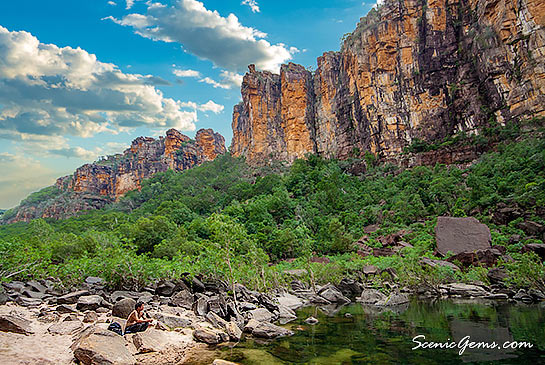 Jim Jim escarpmentWorthy of a trip all in itself
-
 Jim Jim FallsBig is an understatement
The falls are closed to the public during the wet season (approximately October through to June), as the water over the falls is a raging torrent in the summer months. Early in the dry season is the best time to view the falls — before the water recedes with the onset of the dry season. Having said that, even if the falls aren’t flowing, there’s plenty on offer here, with the gargantuan size of this marvel proving to be spectacular at any time of the year.
The road to Jim Jim Falls is a four-wheel-drive-only track, as the fifty-kilometre unsealed road from the highway into Garnamarr Campground can potentially be quite corrugated — depending on when the grader was last through. From the campground, the unsealed road changes to an off-road track. In the dry season, the road is easy enough for any four-wheel-drive vehicle. For up-to-date conditions, the ranger’s office can advise you on all of the above.
Arriving at Jim Jim Falls carpark, the walk begins as an easy unsealed trail but turns into a rocky scramble by the end of the trek — as the boulders get bigger the closer you get to the giant marvel. Note that for anyone with mobility concerns, this may be too difficult. Having said that, if you’re able and willing, you’ll be rewarded with a must-see destination that will be etched in your memory for years to come.
Note: For those day-tripping to the falls from the Kakadu Highway turnoff, the return trip, including the walk, will take approximately four hours (plus sightseeing time).
Grade: Moderate/Difficult, 2km return. Facilities: Public toilets at Jim Jim Falls carpark.
If you’re keen to see all that Kakadu has to offer, a trip to Maguk Gorge (also called Barramundi Gorge) should most definitely be on your radar. A fantastic waterfall and plunge pool await those who come to Maguk, with refreshingly tepid spring-fed water a pleasure to swim in. For the adventurous, there’s also a stunning pocket of pools at the top of the waterfall which are surprisingly deep and a great reward for the slightly challenging scramble to the top.
On the walk to the falls, you’ll come across a large sandy section of a creek (read: beach) complete with crystal clear water. It sits approximately 100 metres before Maguk Gorge and is perfect for the young ones.
-
 MagukBoardwalk
 -
 MagukWaterhole near the end of the walk

The walk to the lower falls traverses through beautiful monsoon rainforest — courtesy of a boardwalk, which for many is a real highlight of the location. The final leg of the trail turns into a rocky scramble but overall is manageable. A creek crossing (with stones to hop) is the most challenging section and might be unnerving for some. Secure footwear is recommended, as some of the rocks may be dusted with sand.
The trail to the top pools (at the time of writing) is neither signposted nor obvious, with many missing it completely. For the fit and active, at the river crossing, head straight (don’t cross the river) to pick up the trail.
Overall, this secluded paradise has a little bit of something for all ages and abilities. If you’re itching to get a taste of what makes the Top End of Australia the natural wonder that it is, you’ll be well rewarded here.
Note: The drive in from the sealed highway is via fourteen kilometres of unsealed road, which can be corrugated in sections as the dry season progresses (four-wheel drive recommended).
Grade: Moderate/difficult, 2km return. Facilities: Public toilets at carpark.
